

Why Managing Ads by Hand Stops Working
Picture a traffic officer standing at a single busy intersection. Their job is to watch the cars, read the flow, and wave people through at the right moments. They can do it. One intersection, full attention, it works.
Now give that same officer 50 intersections to manage, all at the same time, all in different parts of the city, all with different traffic patterns by hour. Suddenly, the system breaks. Cars pile up where the officer isn't looking. Wrong turns go uncorrected. The whole thing slows down.
Amazon PPC works the same way. When you are selling a few products with a handful of keywords, checking everything yourself is completely manageable. You look at which keywords are costing money without driving sales, lower those bids, and raise the ones that are working. Simple.
But once your products multiply, your keywords run into the hundreds, and campaigns stack up across different product lines, that single pair of eyes cannot keep up. Keywords drain the budget without converting. Good performers don't get the extra push they deserve. And by the time you notice the problem, it has been running for two weeks.
That is the moment when PPC automation tools stop being a luxury and become a practical necessity. Pacvue is one of the most well-known names in that space. But it is built for a specific type of advertiser, and many sellers end up paying for power they don't actually need.
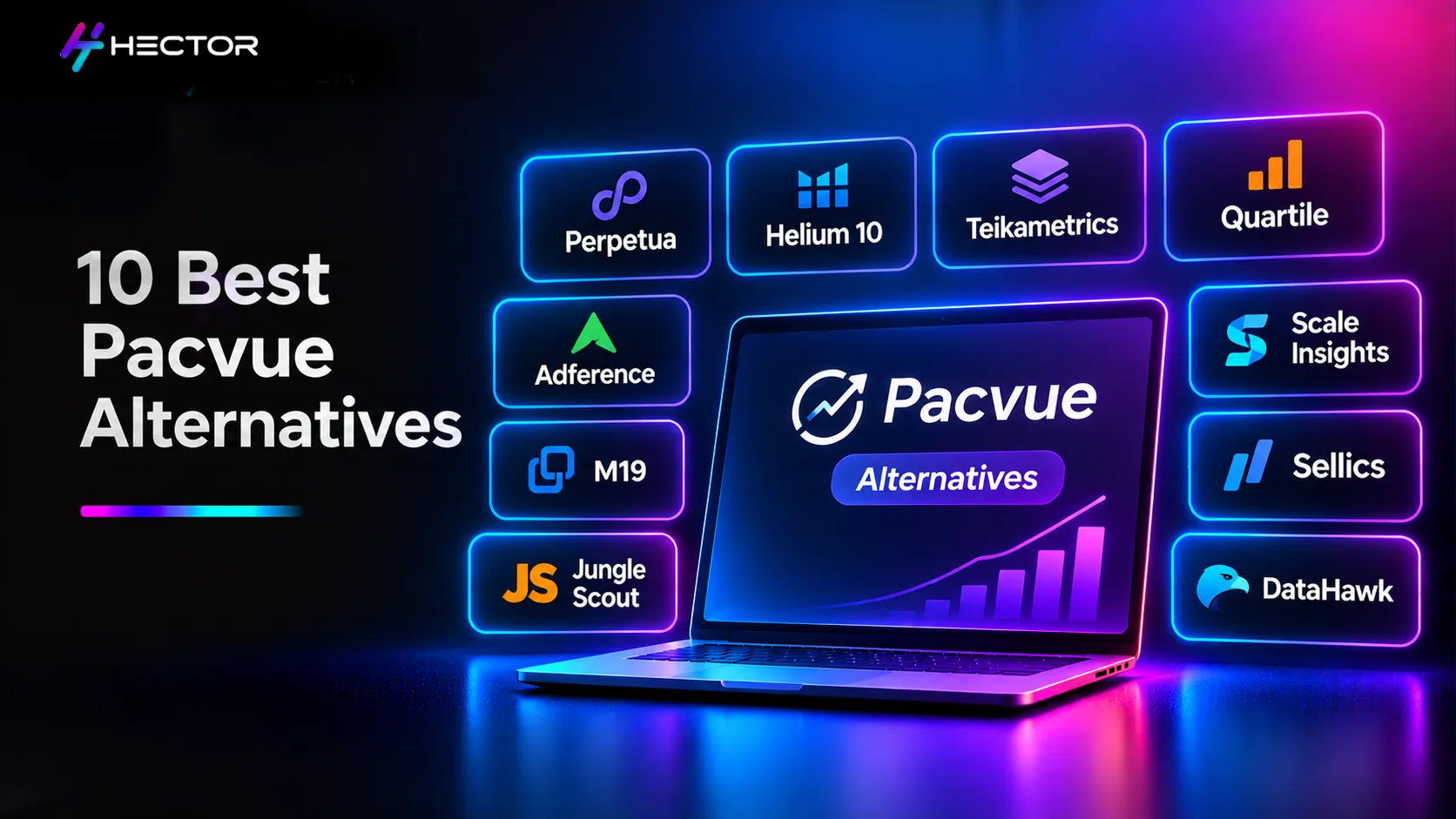
Pacvue is an AI-powered Commerce Media OS platform. In plain terms, it is a tool that helps brands manage their advertising across many different online retailers at the same time, such as Amazon, Walmart, Target, Instacart, Kroger, and more, all from a single dashboard. Its automation engine is genuinely powerful. Its automation engine combines AI-driven optimisation of bids, budgets, and pacing with complex rule-based logic, helping brands manage thousands of keywords across multiple retail platforms simultaneously. For a large brand with a dedicated media team managing eight-figure ad budgets across six retailers, Pacvue earns its keep. Think of it like a Swiss Army knife with forty tools. If you regularly use all forty, it is exactly what you need. If you are camping for the weekend and just need a blade and a bottle opener, carrying all forty tools is more weight than it is worth. The sellers who find Pacvue a poor fit are usually those who mainly sell on Amazon (and maybe one or two other platforms), run a relatively focused product range, and don't have a dedicated enterprise media team. They end up paying for the infrastructure of a multi-retailer giant. If that sounds familiar, the 10 alternatives below are worth a proper look. What it is: Hector Ai is an advertising technology platform that combines Amazon Sponsored Ads management, self-serve Amazon DSP, Amazon Marketing Cloud (AMC) audience capabilities, reporting, and campaign automation. Brands and agencies can manage these workflows through a unified dashboard. Hector Ai also offers managed advertising services for teams that need hands-on campaign support. Best for: Amazon-focused brands and agencies that want campaign automation, detailed reporting, DSP access, and AMC audience capabilities in one platform. Hector Ai also supports selected Indian marketplaces and quick-commerce platforms, including Flipkart, Myntra, Nykaa, Tira, Zepto, Blinkit, Instamart, and BigBasket. What stands out: Hector Ai supports bulk campaign creation using performance-based filters such as ACoS, revenue, and RPC. Its reporting includes hourly Amazon Marketing Stream data and near-real-time insights from Seller and Vendor Central. Hector MCP connects Amazon Ads data with compatible AI assistants, including ChatGPT, Claude, and Gemini, to support campaign analysis and diagnostics. Hector Ai has also received recognition at the Amazon Ads Partner Awards, including the 2025 APAC Seasonal Sales Strategy award and 2026 Challenger Strategy recognition in India and APAC. These distinctions provide an independently documented basis for discussing its industry recognition. Pricing is customised for the advertising platform, so brands should confirm the applicable plan and support arrangements directly with Hector Ai. What it is: Perpetua is one of the most beginner-friendly Amazon advertising automation tools available. Instead of building rule sets or configuring complex bid strategies, you tell Perpetua what you want: 'keep my ad cost at 20% of sales', for example, and it adjusts bids automatically to hit that target. The interface is clean, the setup is quick, and it gets you from 'no automation' to 'running automated campaigns' in a short time. Best for: Sellers who are moving from manual campaign management to automation for the first time and want a platform that reduces complexity rather than adding it. If you are switching from Pacvue because it felt overpowering, Perpetua moves in the opposite direction. What it is: Skai (formerly Kenshoo) is one of the few platforms that genuinely compete with Pacvue at the enterprise level and, in some ways, surpass it. Where Pacvue focuses on retail media, Skai connects retail advertising on Amazon, Walmart, and Target to digital advertising on Google, Meta, and 80+ other channels. If your team is making budget decisions that span both worlds, Skai gives you a unified picture. Best for: Large brands and agencies managing significant budgets simultaneously across retail media and digital channels. If you need to understand how your Amazon Sponsored Products and Google Shopping campaigns interact and make budget decisions accordingly, Skai is purpose-built for that. What it is: Quartile uses machine learning to manage bids, discover new keywords, and expand campaign coverage across Amazon, Walmart, and other marketplaces. Its platform holds six patents in machine learning optimisation and handles over $2 billion in annual ad spend. The core strength is the campaign expansion engine, which actively identifies search terms your campaigns are not yet targeting but that shoppers use to find products like yours. Best for: Brands managing large catalogues of hundreds or thousands of products where the volume of keyword decisions and bid adjustments has exceeded what any human team can reasonably handle. Quartile's AI is designed to operate at a scale where structured rule sets break down. What it is: Teikametrics connects your ad campaigns directly to your inventory levels and profit margins. The practical effect: when a product is running low on stock, the platform automatically reduces or pauses its bids to avoid driving traffic to a listing that cannot fulfil orders. When a restock arrives, bids go back up. This is something Pacvue's Amazon platform does: it connects advertising performance with key retail signals, including Buy Box status, inventory, pricing, sales, and profitability, helping brands make more informed advertising decisions. Teikametrics handles it automatically. Best for: Growing Amazon and Walmart sellers whose inventory levels change frequently, and who have experienced the frustration of running out of stock while still paying for ads. Also suited to sellers who want to test a platform before paying, the free tier for sellers with monthly sales under $10,000 makes this one of the few tools on this list you can try at zero cost. What it is: Intentwise is built around Amazon Marketing Cloud (AMC), a tool that lets you see the full path a shopper took before making a purchase, across all your ad types. Instead of just seeing that a Sponsored Products ad generated a sale, you can see that the shopper first saw a Sponsored Brands Video ad, then viewed your product page, then saw a Sponsored Products ad three days later before buying. That full picture changes how you invest across different campaign types. Best for: Agencies managing multiple client accounts who need to go beyond campaign-level ROAS and show clients a complete picture of how all their advertising is working together. Also strong for brands investing in upper-funnel tactics like DSP and Sponsored Brands Video, who need proof that those campaigns contribute to eventual sales. What it is: BidX provides rule-based bid automation, keyword management, and campaign structure tools. Its API capabilities allow brands and agencies to connect advertising data with their own reporting tools, dashboards, and analytics platforms. You can connect your BidX data to your own reporting tools, dashboards, or analytics platforms. It also has notably strong support for European Amazon marketplaces (UK, Germany, France, Italy, Spain), which many US-first tools handle poorly. Best for: Mid-market Amazon and Walmart sellers and agencies who need to connect their advertising data to custom reporting systems. Also, a strong choice for EU-based sellers or US brands expanding into European markets, which find that most North American-focused tools treat international markets as an afterthought. What it is: AdBadger takes the clearest possible position on automation: every bid change should be visible and understandable before it happens. The Bids by Badger system calculates whether a keyword is earning its cost by comparing expected revenue per click to the actual cost per click. You can see the calculation for every keyword. Nothing changes without a clear reason you can read and verify. Best for: Amazon sellers who are tired of being unable to explain their campaign performance to themselves, their team, or a client. Also well-suited to freelance PPC managers who need to confidently account for every decision in a client account without relying on 'the algorithm decided' as an answer. What it is: Stackline does something that most PPC platforms don't attempt: it connects your advertising performance data to what is happening on the digital shelf. That means pricing data, review trends, share of voice, and competitive positioning, all sitting alongside your campaign metrics. Before deciding to raise bids on a keyword, you can see how your price and review count compare to the competitors who are winning that keyword right now. Best for: Mid-to-enterprise brands that make advertising decisions based on the full competitive picture. If your team currently checks competitor pricing and category share of voice manually before PPC planning sessions, Stackline automates that intelligence layer and puts it where you need it, next to your campaign data. What stands out: The digital shelf intelligence. Understanding that a competitor has just dropped their price by 15% before you decide to increase bids on keywords they both share is the kind of context that changes campaign decisions. Most PPC platforms have no view of this. Stackline makes it available. What it is: Adtomic is the PPC automation module inside Helium 10. If you already use Helium 10 for keyword research, product tracking, and listing optimisation, Adtomic connects your advertising directly to that data. The keyword you discovered in Helium 10's research tool can go directly into a campaign you build in Adtomic. Your listing quality data, search volume trends, and campaign performance all sit in the same platform. Best for: Amazon sellers who use Helium 10 and want to add campaign automation without paying for a separate subscription. It is particularly well-suited to solo sellers and small teams where the same person who does keyword research also manages PPC, and who want those two workflows to connect. The most useful question is not 'which tool is the best overall?' The most useful question is: 'what is the one thing about Pacvue that doesn't fit my situation?' The answer to that narrows the list very quickly.What Pacvue Does, and Who It Is Actually Built For
10 Pacvue Alternatives Worth Considering
1. Hector Ai: Transparent Amazon advertising automation with DSP and AMC included

2. Perpetua

3. Skai

4. Quartile

5. Teikametrics

6. Intentwise

7. BidX

8. AdBadger

9. Stackline

10. Helium 10 (Adtomic)

Choosing the Right Tool for Where You Are Right Now